


.png)
For busy families and hands-on homeowners eyeing a side income, the short-term rental market can look like one of the clearest real estate investment opportunities around. The core tension is real: vacation rental entrepreneurs want dependable cash flow and flexible personal use, but vacation rental business challenges show up fast when bookings dip, guests are demanding, or rules change. The difference between a fun project and a money pit often comes down to understanding property management basics before committing to a property. With the right expectations, smart decisions start to feel straightforward.
Pick a Property That Pays: 4 Checks Before You Buy
Buying a vacation rental is exciting, but it’s also where most “I didn’t see that coming” headaches start. Use these checks as real estate investment criteria to narrow your choices and protect your budget, time, and family life.
Set It Up Like a Business: A Simple Day-One Roadmap
Once you’ve found a property that can realistically earn its keep, the next step is making sure the operation behind it is built to last. From day one, treat your vacation rental like a real business, not a casual side hustle, because the decisions you make early shape your risk, your workload, and your long-term returns. Buying the right place is only part of the picture; you also need to think through liability protection, clean financial organization, and how you’ll grow over time. Establishing a formal business structure can help you separate personal and business finances, which makes it easier to track performance, make smarter money decisions, and create a stronger foundation for managing one or more rental properties. If you want a practical walkthrough of the planning side of rental property investing, this guide can help you map out the basics.
Location and Property Options, Side by Side
To narrow your search, it helps to compare the most common “where” and “what” combos the same way you would compare job offers: upside, effort, and risk. The table below contrasts popular destination types with typical property styles so you can quickly spot what matches your budget, time, and guest expectations.
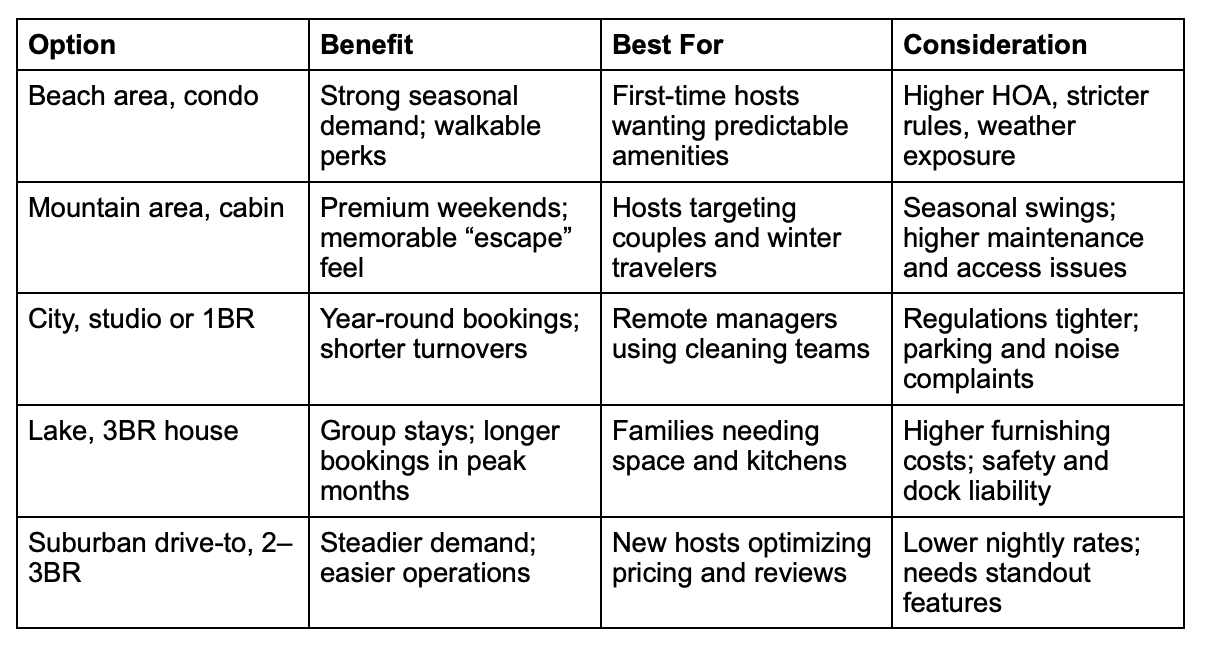
Many operators aim for 8% and 12% ROI, but the “best” choice is the one you can run consistently without burning out. Use this grid to balance purchase price, booking seasonality, and amenity-driven upkeep, then pick the path you can execute with confidence. Knowing which option fits best makes your next move clear.
Vacation Rental Business FAQs New Hosts Ask
Q: What rules should I check before I list the place?
A: Start with three checkpoints: local short term rental rules, your insurance requirements, and any HOA or condo bylaws. Call the city or county office and ask what permit, inspection, or occupancy limits apply. Then request the HOA rental policy in writing so there are no surprises.
Q: How do I handle guests who want early check in or break house rules?
A: Put boundaries in your listing and repeat the top five rules in a pre arrival message. Use automated replies for common requests, and offer paid early check in only when your cleaner confirms it is possible. If a rule is broken, document it with photos, message calmly in writing, and escalate through the booking platform.
Q: When should I schedule maintenance so it does not wreck reviews?
A: Create a simple calendar: monthly safety checks, quarterly deep maintenance, and a seasonal reset before your busiest period. Keep a locked owner closet with spare batteries, filters, lightbulbs, and a basic tool kit. Line up two backup vendors before your first booking.
Q: What taxes should I expect as a beginner host?
A: You may owe lodging taxes, income taxes, and sometimes local fees, so confirm what is collected automatically by your platform. The IRS test for being classified as a personal residence can affect what you can deduct, so track rental nights and personal use from day one. The next step is to open a separate bank account and save receipts digitally.
Q: Can this still pay off if demand feels uncertain?
A: The global vacation rental market is projected to reach $105.7 billion, but your results depend on execution. Focus on controllables: professional photos, realistic occupancy targets, and a pricing tool or rule set you can follow weekly. Start lean, improve after each stay, and let reviews compound.
Turn Planning Into Profitable Vacation Rental Momentum This Week
Starting a vacation rental can feel like a tug-of-war between big dreams and real-world unknowns, rules, budgets, seasons, and whether the numbers truly work. The steadier path is the one you’ve built here: calm investment decision-making, thoughtful long-term rental planning, and staying curious about market trend insights instead of chasing noise. When you work that approach, the business stops feeling like a gamble and starts looking like a repeatable system you can improve over time. A good rental isn’t luck, it’s clear numbers, clear rules, and consistent follow-through. This week, you can choose one entrepreneurial next step, review one property’s projections, confirm one local requirement, or set one simple tracking habit for demand and pricing. That’s how vacation rental business growth becomes a practical way to build resilience and more breathing room for your family.
